Leather
Full Grain vs Genuine Leather Bags
"Genuine leather" sounds like a quality promise. It's actually one of the lowest grades. Here's what each leather label on a bag listing really means, and which one to pay for.
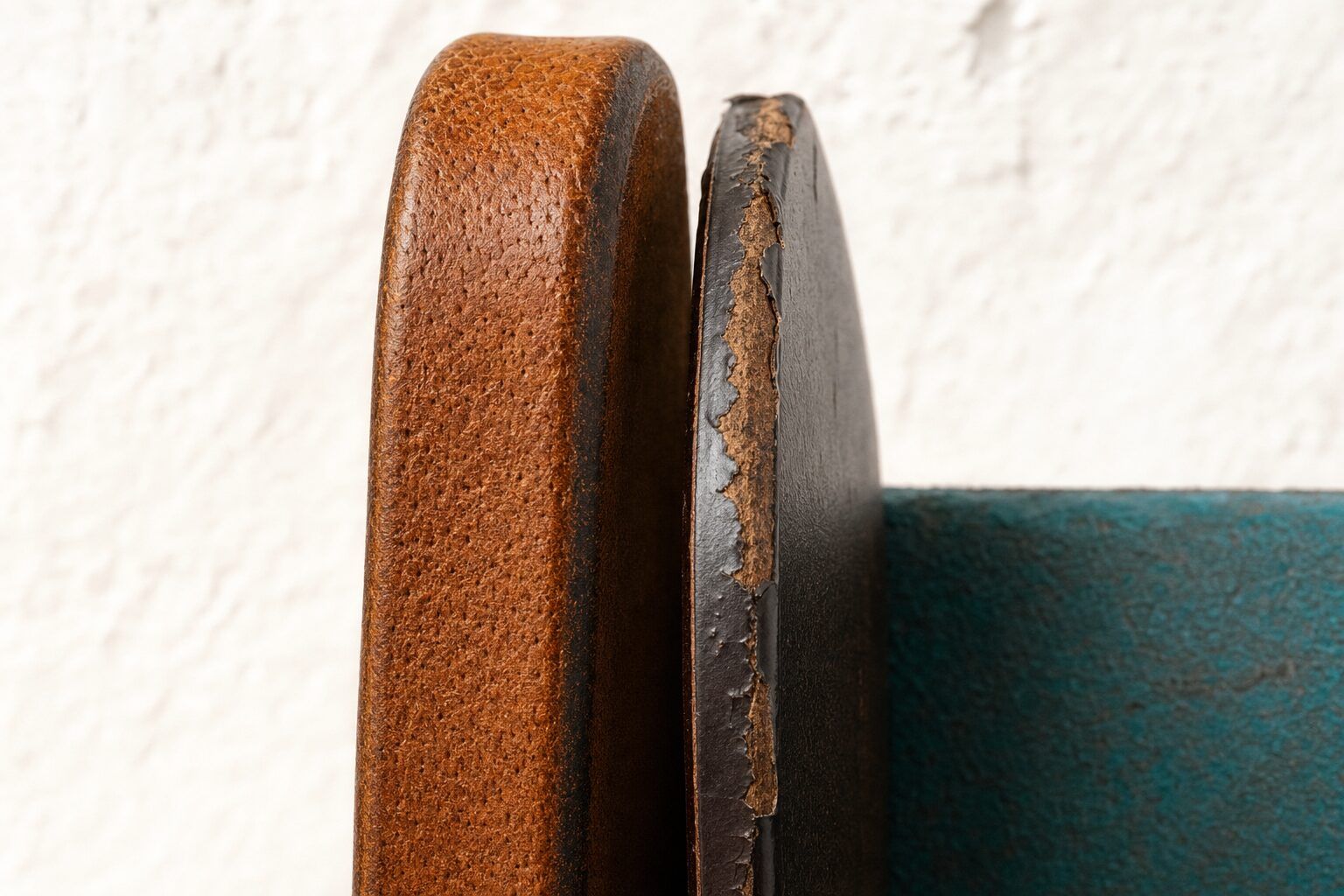
A cowhide is thick. Tanneries split it into layers, and the layer a bag is made from decides most of how it will age. The labels on bag listings refer to those layers, plus what’s been done to the surface.
The grades, from best to worst
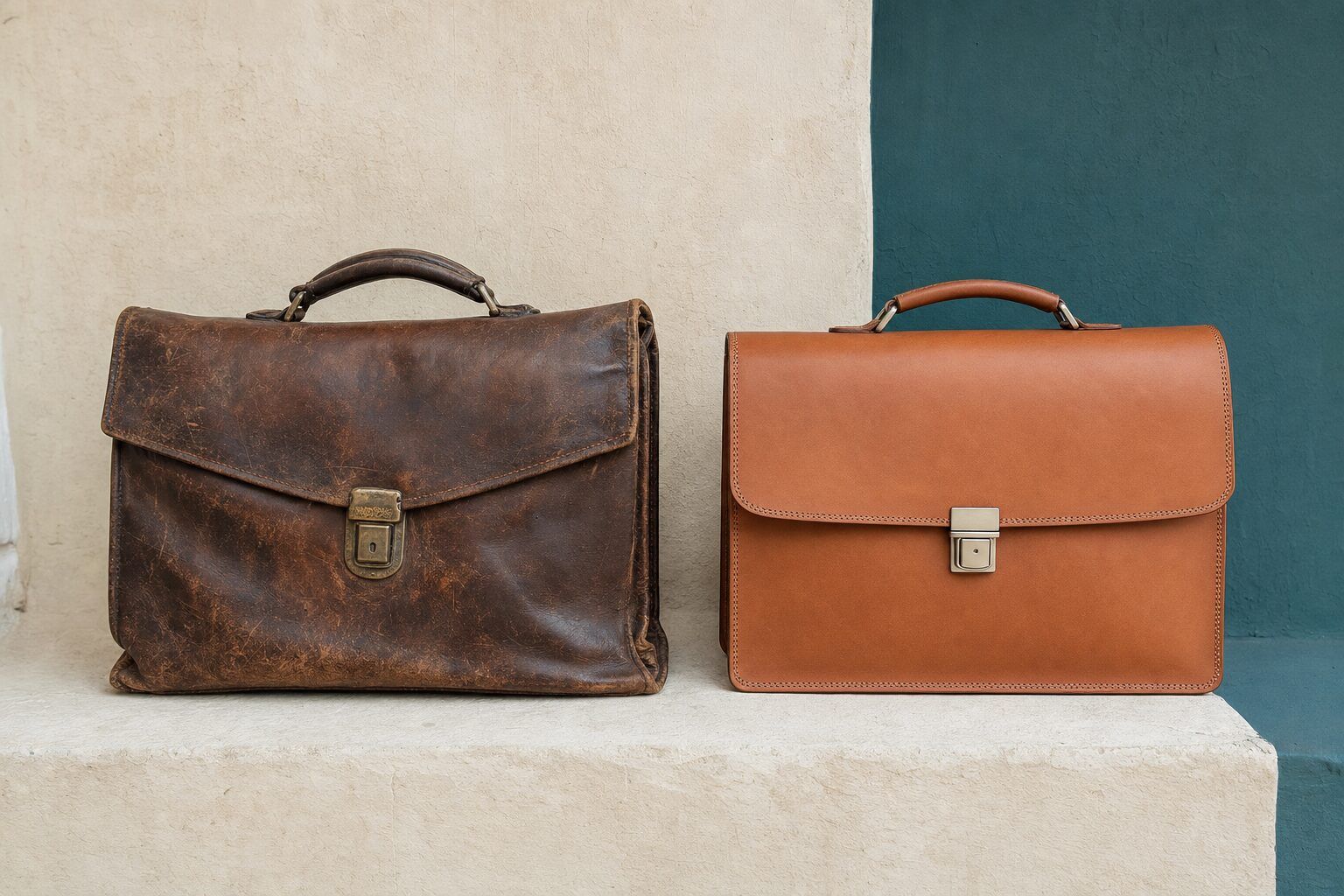
Full-grain leather is the outer layer of the hide with the surface left intact. You can see pores, small scars and natural variation. It’s the strongest layer, it breathes, and it darkens and softens into a patina over time.
Top-grain leather is the outer layer too, but the surface has been sanded and finished to hide flaws. It’s smoother, more uniform and more stain resistant. It’s also a little weaker and won’t age the same way.
Genuine leather is a catch-all term, usually meaning split leather from lower layers, with an embossed and painted surface to look like grain. It’s real leather, and it’s the cheapest grade most brands will put the word “leather” on.
Bonded leather is leather scraps ground up and glued onto a backing. It peels, often within a year or two of regular use.
PU leather, vegan leather, leatherette are plastics. Some are decent. None are leather.
How each one ages on a bag
| Grade | First year | After a few years |
|---|---|---|
| Full-grain | Stiff, may smell strong, scratches show | Softer, darker, scratches blend in |
| Top-grain | Looks the same as new | Even wear, can crack at folds if thin |
| Genuine | Looks fine | Surface paint scuffs and peels at corners and edges |
| Bonded | Looks fine | Flaking, especially at handles and straps |
Why makers use confusing words
“Genuine” sounds like “authentic.” “Premium leather” and “real leather” aren’t grades at all. If a listing doesn’t say full-grain or top-grain, assume it isn’t either.
Some listings say “full-grain” in the title and “genuine leather” in the details. When that happens, owner reviews are your best tie-breaker. Look for comments about peeling, flaking or a plastic feel.
Where cheap leather fails first
Low-grade leather rarely fails all at once. It goes at the stress points:
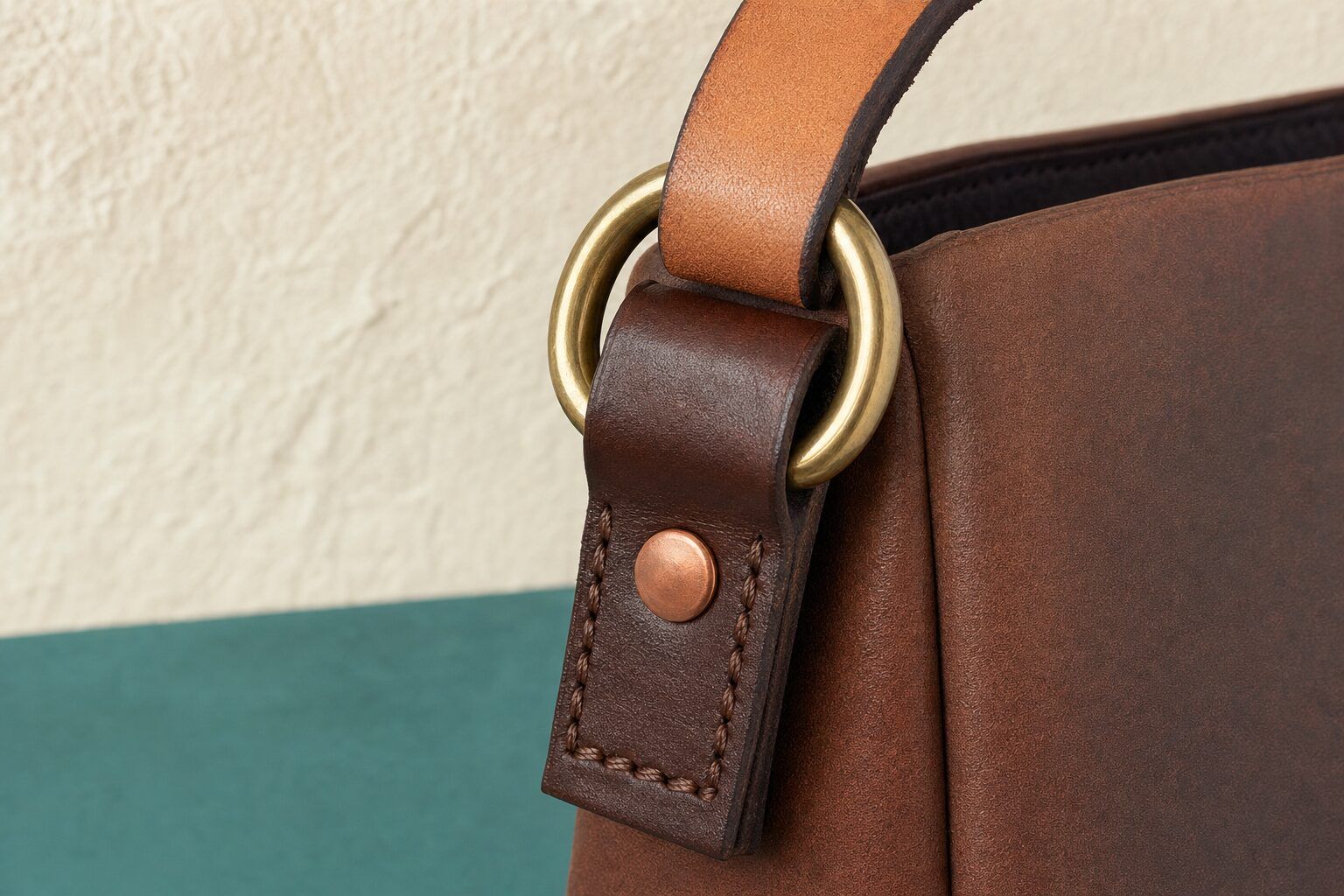
- Handle wraps start peeling where your hand grips.
- Bottom corners scuff through the painted surface.
- Fold lines on flaps crack.
- Strap edges fray where the paint wears.
Is full-grain always worth it?
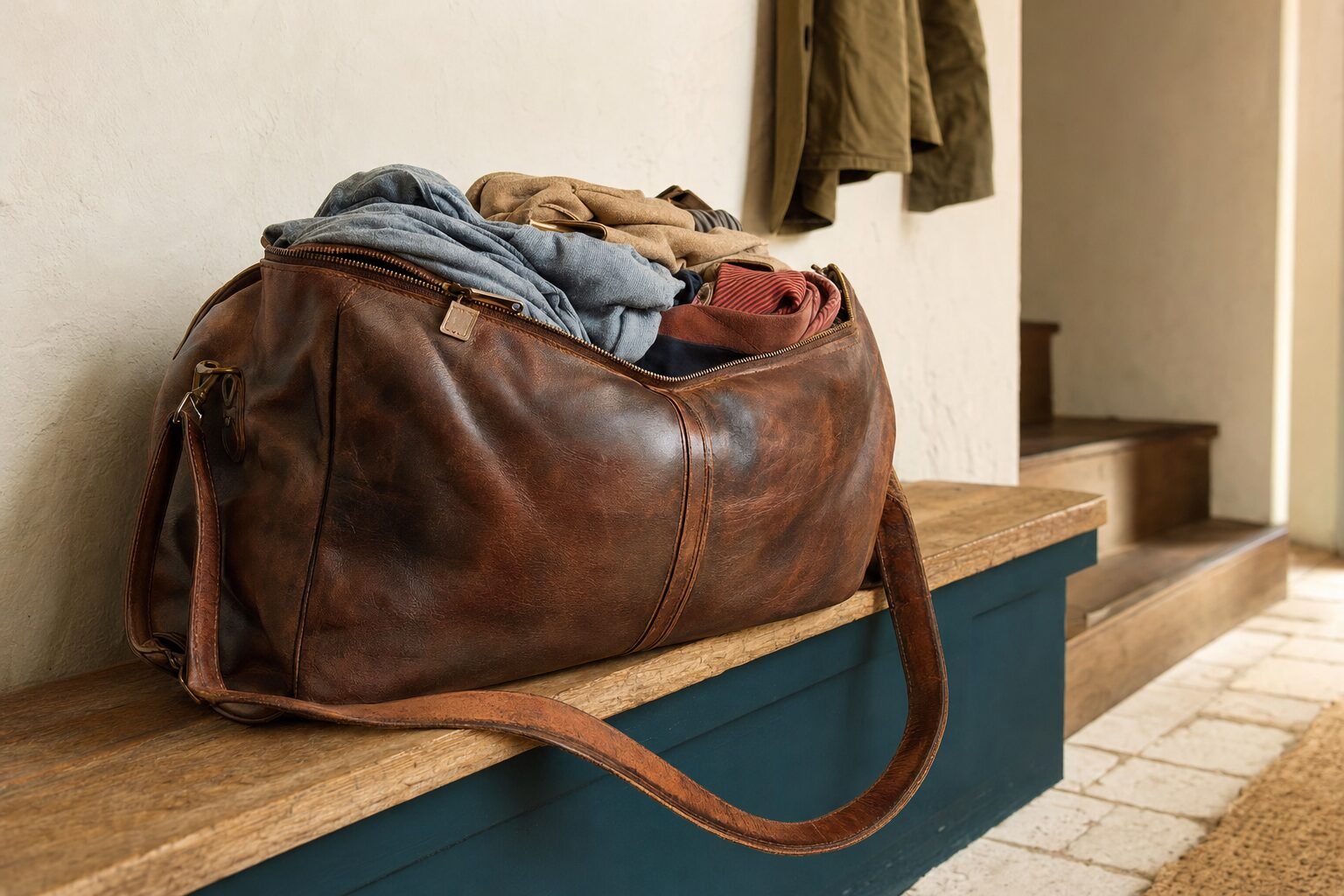
For a daily bag you plan to keep for years, yes. For a bag you’ll use a few times a year, top-grain is fine and often lighter.
Full-grain has trade-offs that owners mention a lot: it’s heavier, it can smell strongly for the first weeks, and it shows scratches when new. Most people come to like those scratches. Some don’t. Read how to care for a leather bag and how to spot low-quality leather online before you buy.
Frequently asked questions
Is genuine leather real leather?
Yes, it is real leather, but it usually means the lower layers of the hide with an artificial surface pressed and painted on. It looks fine new and tends to crack and peel with daily use.
Is top-grain leather bad?
No. Top-grain has the outer surface sanded and coated, so it's more uniform and stain resistant. It won't develop a deep patina like full-grain and can be thinner, but a good top-grain bag can last for years.
What is crazy horse or hunter leather?
These are finishes, not grades. They usually describe full-grain or top-grain leather treated with oil or wax so it shows scratches and color changes. Ask which grade sits underneath.
Still deciding? Answer five quick questions and we'll point you to the bag type that fits.
Find my bag type