Buying
How to Spot Low-Quality Leather Bags Online
You can't touch a bag through a screen, but listings and photos give a lot away. Here's how to read a leather bag listing like a skeptic before you click buy.
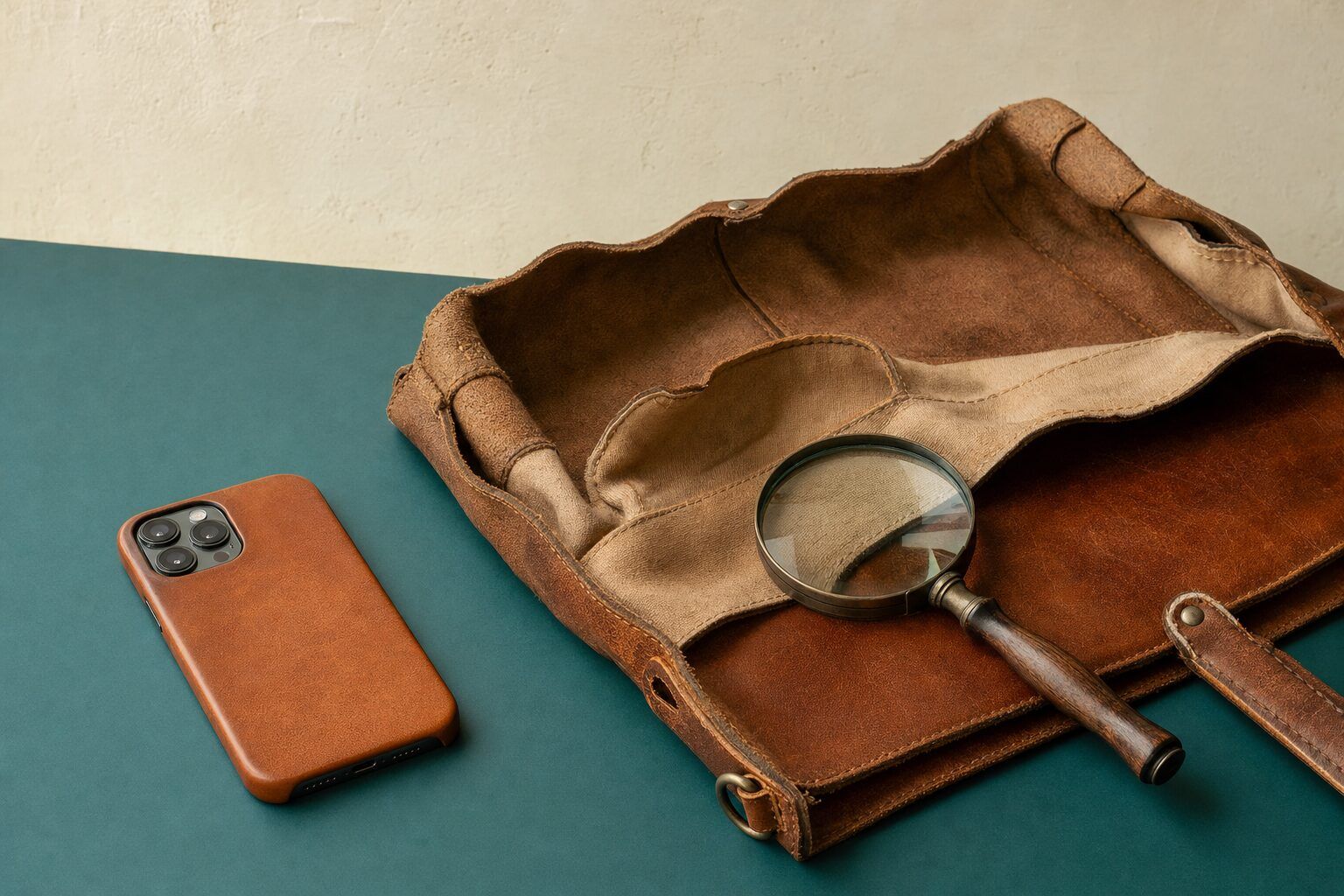
Buying a leather bag online is a bit of a gamble, because the things that matter most, weight, stiffness, smell and how the leather feels, don’t come through a screen. But listings leave clues.
Red flags in the title and description
- “Genuine leather,” “real leather” or “premium leather” with no grade. If it were full-grain, they’d say so. See full grain vs genuine leather.
- Conflicting claims. The title says full-grain, the details say genuine or top-grain. Believe the less flattering one until reviews confirm otherwise.
- No inside dimensions. Only outside dimensions, or only “fits 15.6 inch laptop.”
- No weight listed. Makers of heavy full-grain bags usually list weight. Leaving it out can mean it’s surprisingly heavy, or surprisingly light for “full-grain.”
- “Alloy” hardware. Usually means plated zinc. Solid brass and stainless steel are named because they’re selling points.
Red flags in photos
- Only rendered or studio photos. Look for owner photos in the reviews.
- A perfectly uniform surface. Full-grain leather varies. Identical texture across every panel often means embossed or coated leather.
- No close-ups of stitching, edges or strap anchors. Good makers show these because they’re proud of them.
- Thick, shiny painted edges. Common on lower grades, and they tend to crack.
Reading the reviews
Reviews are the best evidence you have. Read them the right way:
- Sort by most recent. Older reviews may be for an earlier version.
- Read the one to three star reviews first. Look for repeated problems. One broken strap is bad luck. Five broken straps is a design flaw.
- Look for long-term reviews. “I’ve used this daily for two years” is worth twenty “just arrived, smells great” reviews.
- Check that reviews match the product. Some listings merge reviews across colors, sizes or even different bags.
- Look at owner photos. Especially of wear after months of use.
Green flags
- The leather grade, tannery or thickness is stated.
- Inside dimensions, laptop sleeve size and weight are listed.
- Close-up photos of stitching, edges and hardware.
- A warranty longer than a year, and a clear return policy.
- Reviews that mention specific details, both good and bad.
When a deal is too good
A full-grain leather messenger with solid brass hardware, stitched and riveted anchors and a padded sleeve costs real money to make. Very low prices aren’t impossible, but they usually mean something got cut. Owner reviews will tell you what.
Our owner review roundups do this reading for you on popular bags, and summarize what owners repeatedly praise and complain about.
Frequently asked questions
Are leather bags with thousands of five star reviews trustworthy?
Not automatically. Reviews can be merged across product variations or come from the first days of ownership. Sort by most recent and read the lower star reviews for patterns.
Can I tell real leather from a photo?
Sometimes. Real full-grain leather shows small variations in pore pattern and color. A perfectly uniform, glossy surface with a repeating texture often means a coated or embossed leather, or a synthetic.
Still deciding? Answer five quick questions and we'll point you to the bag type that fits.
Find my bag type